Hi! I’m Sophia
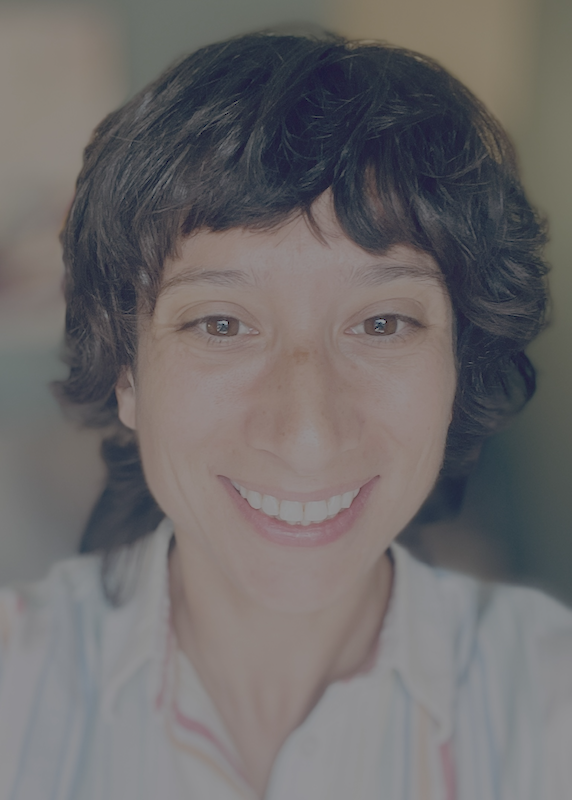
Are you dealing with a major change or loss? Does it feel overwhelming? Or disconnected and numb? Imagine being able to ride waves of the ocean of life confident in your ability to manage grief, overwhelm, anxiety, or dissociation. We will help you befriend what feels like monsters and transform them into your supports and guides. Together you'll develop a new sense of okayness with yourself, others, and the world. I am experienced and passionate about working with multicultural, queer, and neurodivergent inbetweeners navigating grief, life change, and stress.
My approach is collaborative, flexible, and client-centered. I bring trauma-informed body-based, contemplative, and parts approaches to the table and you bring your expertise in yourself. We get to be creative in learning about your inner organization, developing resources, and processing wounds. I’ve completed Sensorimotor Psychotherapy Level 1 and 2 for trauma and developmental/relational wounding.
Outside of the therapy room, I enjoy plant parenting, creating herbal remedies, knitting, reading, backpacking, meditating, and hanging out with family and friends.
Training & Professional Development
Licensed Professional Counselor, Colorado, LPC.0020900
MA Clinical Mental Health Counseling, Contemplative Psychotherapy and Buddhist Psychology, Naropa University, 2022
Sensorimotor Psychotherapy Level 2 Developmental Injury, Sensorimotor Psychotherapy Institute, 2025
The Dos and Don’ts of Counseling with Neurodivergent Clients: A Trauma-Informed Somatic Approach to Autism and ADH, Nyck Walsh, 2025
Sensorimotor Psychotherapy Level 1 Trauma Themes, Sensorimotor Psychotherapy Institute, 2024
CAMS (The Collaborative Assessment and Management of Suicidality), 2023
Mindfulness Instructor, Naropa University, 2023
Embodied Social Justice Certificate, Embody Lab, 2021
Level 1 training, Racial Equity Institute, 2018 & 2019
Crisis Counselor Training, Hopeline, 2018
Therapy Rates
$150/ 55-minute session
Sliding scale available
I accept Aetna, Cigna, Kaiser, UnitedHealth, and Medicaid (CCHA) insurance
HSA/FSA accepted
I reserve space for those who are uninsured or underinsured requiring low-cost options through Open Path Psychotherapy Collective. You may visit Open Path to sign up. (Currently these spots are full)
I’m happy to provide a superbill to help you with insurance reimbursement and out-of-network benefits

-
I offer individual therapy to adults and adolescents. I offer virtual, in office, and walk-and-talk options. My approach is grounded in contemplative, somatic, and parts approaches.
-
The first chunk of each session we touch in on what is going on in your life, present or past. We decide together what we will focus on for the session. We can only do so much in 55 minutes that’s why we choose a theme to explore. From there, we delve into the felt sense of the experience. Instead of talking about it, we feel into it directly. We’ll try things out to learn more about it, create a restorative experience, develop a resource, or process trauma. The last ten minutes or so we tune into new insights, changes, or goodness that arose during the session to reinforce the neuropathways that are developing. The whole thing is a collaborative and creative process.
-
You don’t have to. We work with what you bring in. We explore things as you are ready to touch. You get to say “no”, “not yet”, “not that”. There are several ways that we work without naming certain experiences or going into the story of them.
-
Somatic therapy is different from talk therapy in some ways. We are weaving in the body’s wisdom including sensation, felt sense, movement, posture, and gesture alongside emotions, thoughts, beliefs, and memories. We might explore themes by trying on different postures, walking through the room, pushing on a wall, holding a pillow or something else to investigate through the body, emotions, and mind. This can feel different for some clients who are more familiar with telling the story of what’s happened or addressing mostly thoughts and beliefs.
-
Contemplative psychotherapy focuses on befriending all the parts of who we are. It doesn’t mean we have to like or agree with them. It’s more about getting to know all of you to see what new possibilities may arise. Contemplative psychotherapy also tunes into the present moment, what is happening right here, right now.
-
I specialize in trauma, relational wounding, grief, social wounding/oppression themes, and multicultural themes. I am experienced with working with BIPOC, LGBTQ, and neurodivergent communities.
-
Try it. Typically within eight sessions you’ll have a sense if the approach is a good fit and if I’m a good fit. You’re not committed to staying. What matters most to me is that you find what works for you and I understand that I might not be the person. This is a great way for you to practice listening to yourself and honoring yourself.
-
Unfortunately, the design of the current health care system does not offer an ideal set up for clients nor clinicians. The cost of a session includes more than just the 55 minutes that we meet together. It includes time I spend in training, consultation, researching, administrative tasks, billing, marketing, bookkeeping, accounting, care coordination, vacation time, and sick time. It is a rate that allows me to meet my daily living needs and sustain my wellbeing in order to continue to provide counseling services.
My business model strives to create access to care for a variety of economic needs. I reserve 25% of my client slots for people with Medicaid and 10% for reduced fee sliding scale options through OpenPath Collective. I offer sliding scale options to increase affordability. I accept several insurances (Kaiser, Cigna, UnitedHealth) so that clients may cover their care through insurance.
I acknowledge that I live in the territory of hinono’eino’ biito’owu’ (Arapaho), Núu-agha-tʉvʉ-pʉ̱ (Ute), Tséstho’e (Cheyenne), and Očhéthi Šakówiŋ Nations, according to Native Land, and that Colorado’s Front Range is home to many Native peoples. I further recognize I occupy this land due to the broken Treaties of Fort Laramie of 1851 and 1868.